

Join beta
Wellbeing context

Support wellbeing by seeing what steadies your day.

Mood and stress are shaped by the whole day: sleep, movement, food, digestion, routines and pressure. The goal is not to score yourself. It is to notice what helps you feel more steady over time.

Person holding a warm drink in a calm setting.
Track mood, stress and routine context together.
Short guide

What the research suggests

Wellbeing research rarely points to one perfect habit. It points to connected signals. Sleep, movement, stress practices and routine regularity all make more sense when they are reviewed beside the rest of the day.

Movement

Movement is linked with better mental wellbeing.

A meta-analysis of prospective cohort studies found that higher physical activity was associated with lower odds of developing depression later. For personal tracking, movement is useful context beside mood, stress and sleep.

Schuch et al., American Journal of Psychiatry, 2018
Stress

Stress practices can help, but results vary.

A JAMA Internal Medicine systematic review found evidence that meditation programs can help some stress-related outcomes, while also noting limits in the evidence. That is a good reason to track how a routine works for you, not assume it works the same for everyone.

Goyal et al., JAMA Internal Medicine, 2014
Sleep

Sleep belongs next to mood, not in a separate silo.

A systematic review and meta-analysis reported associations between sleep duration and risk of mental disorders. Sleep is not the whole explanation, but it is one of the first daily signals worth keeping beside mood and stress.

BMC Psychiatry, 2023
Routines

Regular rhythms can support steadier days.

Research on social rhythms in people with insomnia found that regular daytime activities were related to sleep. For wellbeing tracking, routines such as wake time, meals, movement and wind-down can help explain why one day felt steadier than another.

Sleep Medicine, 2014
Try this

A simple wellbeing experiment.

Choose a small routine that is realistic on ordinary days. Track enough context to see whether it supports steadier days, without turning reflection into more pressure.

01

Name the signal

Choose one wellbeing signal to watch, such as mood, stress, recovery, sleep quality or a simple energy score.

02

Log the context

Add the surrounding day: sleep, movement, meals, digestion, cycle context, caffeine, work pressure or social routine.

03

Review patterns gently

Look for repeatable patterns over days or weeks. One hard day is context, not a conclusion.

How Basentra helps

Connect wellbeing notes to the rest of your day.

Basentra keeps mood, stress, sleep, food, movement and routines in one daily picture. It helps you review your own patterns carefully, while keeping medical and crisis support outside the app.

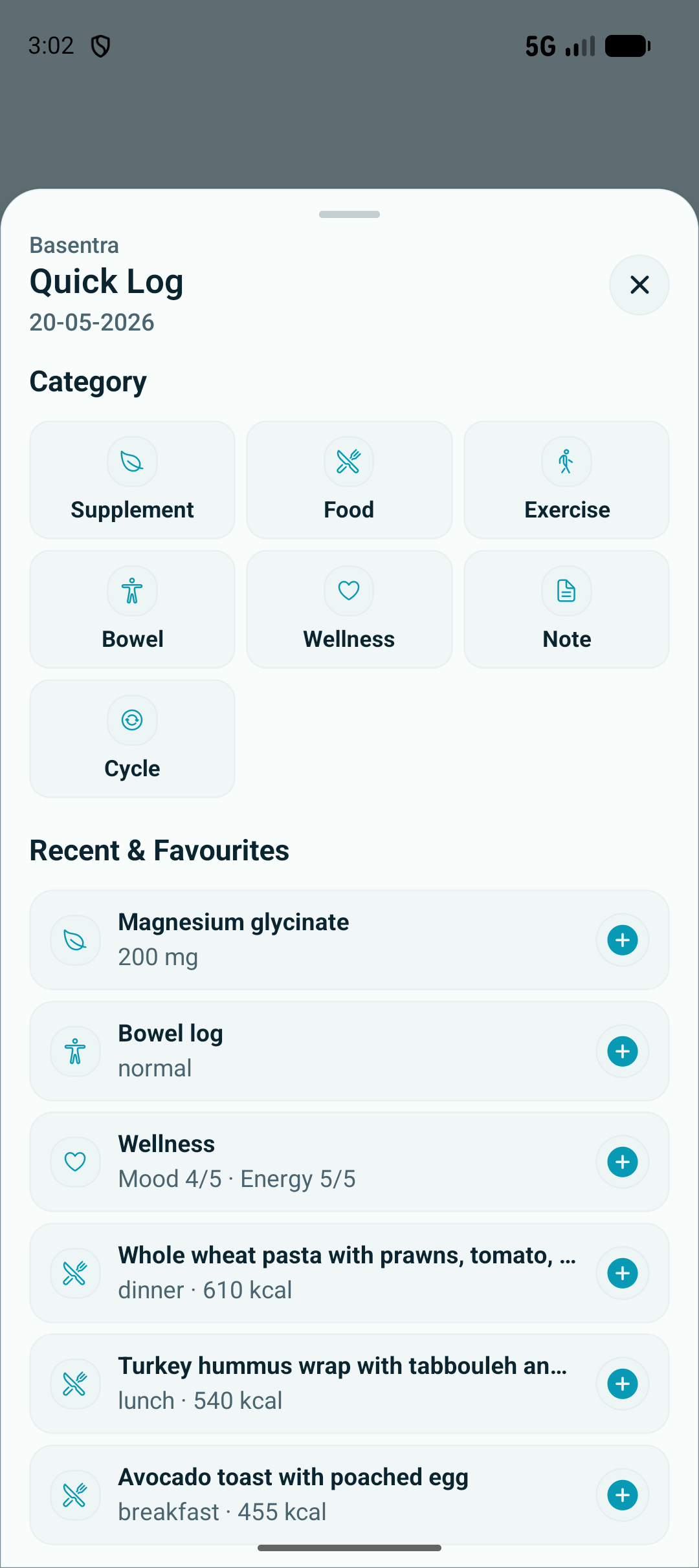
Quick-log mood, stress, sleep quality, movement, food, digestion and notes from the same day view.

Use reminders and saved routines to make wellbeing check-ins less dependent on memory.

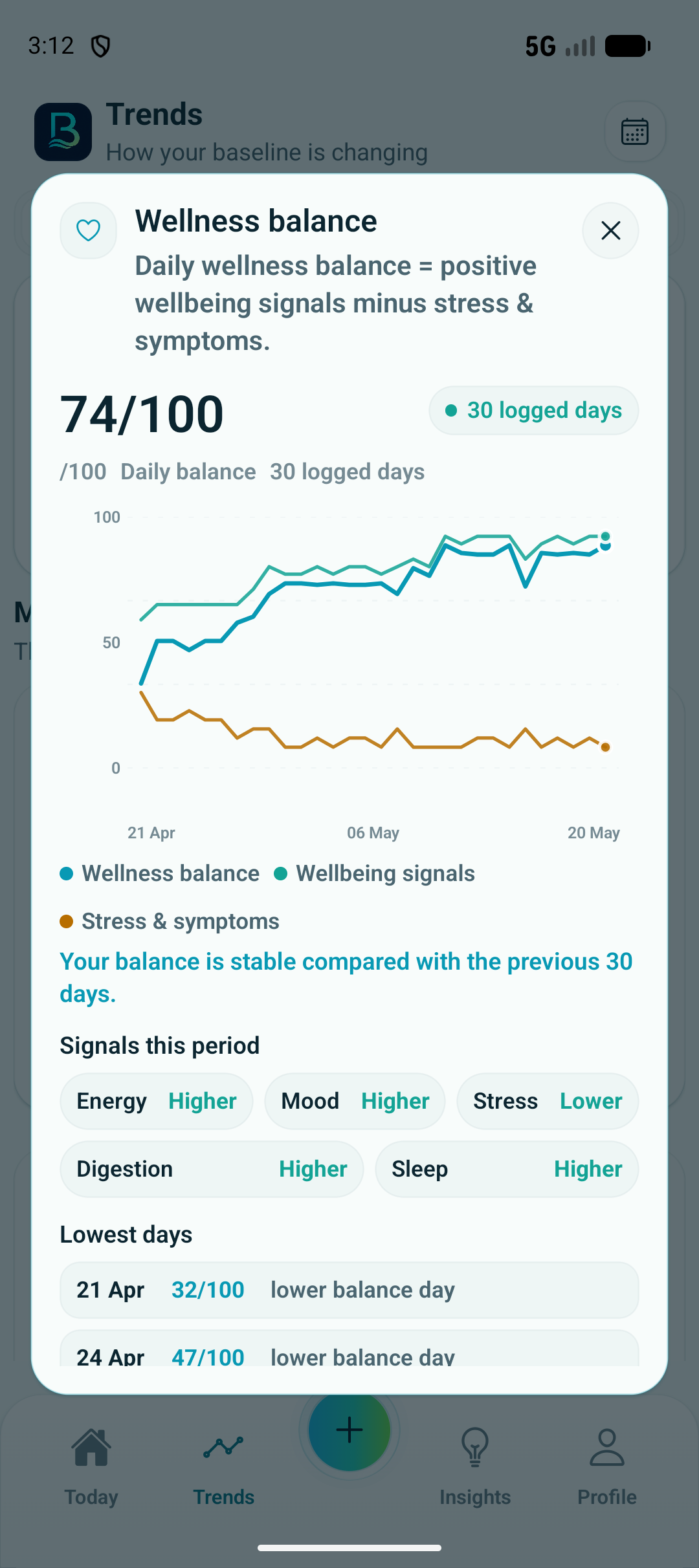
Compare wellbeing signals against your own baseline instead of generic productivity advice.

Keep the boundary clear: Basentra supports personal reflection, not diagnosis, treatment or crisis care.

Basentra Quick Log screen with wellness, food, exercise, bowel and note actions.
Basentra wellness detail screen showing wellbeing balance and logged signals.
Early access

Help shape the Basentra beta.

Test the daily logging flow, review points and product surfaces before launch.

Join beta